Getty Center
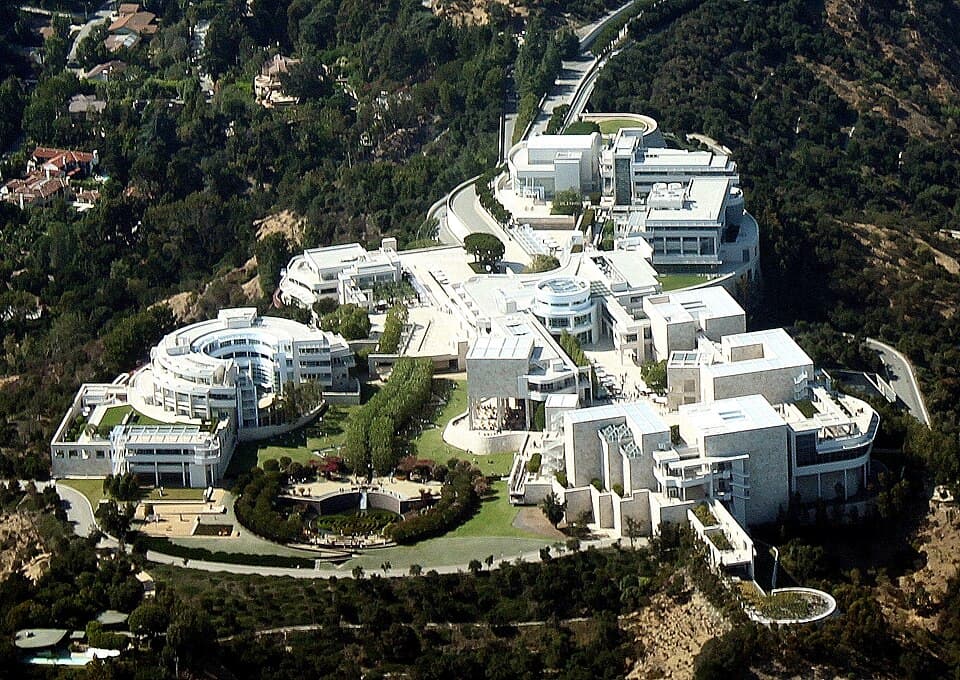
Photo: Jelson25 · Public domain
About
The Getty Center grew out of a much smaller museum J. Paul Getty opened in his own Pacific Palisades home in 1954, later expanded into a replica of a Roman villa. After his death, the J. Paul Getty Trust chose architect Richard Meier in 1984 to design a larger campus on a hilltop in Brentwood, a project that took over a decade to complete because of the site's scale and travertine stone cladding.
Visitors reach the museum by a cable-pulled tram that carries them up from the parking garage, a design meant to slow arrival and separate the hilltop from the traffic below. Artist Robert Irwin designed the sprawling Central Garden beside the galleries, planting hundreds of varieties that change with the seasons. The collection itself centers on European painting, drawing, and decorative arts from before the 20th century, including van Gogh's Irises.
Because the galleries are largely pre-20th-century European art, exhibit labels lean on visual works rather than heavy text, and the tram ride and garden alone are worth the trip for families with young children. General admission has been free since the museum opened, which makes it one of the few major LA museums a family can visit repeatedly without budgeting for tickets.
Visitor information
Admission General admission is free and has been since the museum opened; only parking is charged, and a timed entry pass is recommended in advance through the official site.
Getting there Metro buses serving Wilshire/Sunset routes stop near the hillside entrance, where the parking-garage tram is the only way up to the galleries.