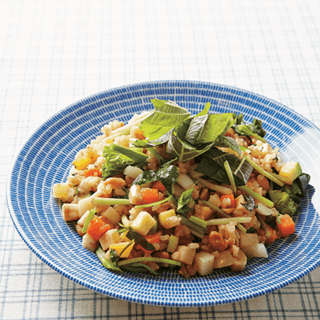
Season with low-sodium raw cheonggukjang. Use root vegetables and flavored vegetables that contain a lot of potassium. Increased sodium excretion effect while preserving aroma and taste
Calories
467kcal
Carbs
25.05g
Protein
4.27g
Fat
4.9g
Sodium
234.1mg
Ingredients
Main
Others
Ingredients Rice(100g), Brown Rice(30g), Potato(30g), Sweet Potato(15g), Onion(15g), Lotus Root(15g) Carrot(15g), Zucchini(15g), Burdock Root(15g), Garlic(3g), Spinach(5g), Pimpinella (Wild Chervil)(10g) Perilla Leaf(5g), Watercress(5g) Broth, Kelp(2g) Seasoning Fresh Cheonggukjang(30g), Perilla Seed Powder(2g), Olive Oil(10g), Perilla Oil(8g)
Finding these ingredients in the US
- Perilla LeafKorean markets only, sometimes labeled 'sesame leaves'. Shiso looks similar but tastes different — there is no true substitute.
- WatercressWater dropwort, at Korean markets in season. Watercress comes closest in flavor and crunch.
- ZucchiniKorean zucchini (aehobak) is sweeter with thinner skin; regular zucchini works fine in most dishes.
- Sweet PotatoKorean sweet potatoes (white flesh, chestnut-like) are at Asian markets — 'Japanese sweet potato' is the same style. Orange yams are much wetter.
Nutrition Facts
Per 100g of main ingredientsRice
- Rich in vitamin B3 (niacin) (3.1mg) — supports energy metabolism and skin health
- Rich in vitamin B1 (0.23mg) — used to turn carbohydrates into energy
Brown Rice
- Rich in dietary fiber (5.2g) — can support digestion and help you feel full
- Rich in vitamin B3 (niacin) (2.2mg) — supports energy metabolism and skin health
Potato
- Rich in vitamin C (31mg) — acts as an antioxidant and helps you absorb iron
- Rich in potassium (590mg) — helps balance sodium and supports muscle function
Sweet Potato
- Rich in potassium (380mg) — helps balance sodium and supports muscle function
- Rich in dietary fiber (2.4g) — can support digestion and help you feel full
Onion
- Contains dietary fiber (1.6g) — can support digestion and help you feel full
Lotus Root
- Rich in vitamin C (28mg) — acts as an antioxidant and helps you absorb iron
- Rich in dietary fiber (3.3g) — can support digestion and help you feel full
Carrot
- Rich in vitamin A (460μg) — supports normal vision and skin health
- Rich in dietary fiber (3.1g) — can support digestion and help you feel full
Zucchini
- Rich in vitamin C (40mg) — acts as an antioxidant and helps you absorb iron
- Rich in calcium (61mg) — a key building block of bones and teeth
Burdock Root
- Rich in dietary fiber (4.6g) — can support digestion and help you feel full
- Rich in potassium (410mg) — helps balance sodium and supports muscle function
Spinach
- Rich in vitamin C (51mg) — acts as an antioxidant and helps you absorb iron
- Rich in vitamin A (430μg) — supports normal vision and skin health
Pimpinella (Wild Chervil)
- Rich in vitamin A (480μg) — supports normal vision and skin health
- Rich in potassium (960mg) — helps balance sodium and supports muscle function
Watercress
- Rich in vitamin A (140μg) — supports normal vision and skin health
- Rich in potassium (380mg) — helps balance sodium and supports muscle function
Source: RDA National Standard Food Composition Table. General nutritional info, not a claim of medical benefit.
Instructions
Follow the steps to see at a glance when and how each ingredient is used.
 🔍
🔍Wash the rice and brown rice thoroughly in water, soak, and cook to a fluffy texture.
 🔍
🔍Small-dice potato, sweet potato, burdock root, onion, carrot, zucchini, and lotus root, and slice the garlic thin.
 🔍
🔍Coarsely julienne the spinach, pimpinella, and perilla leaf, and cut the watercress into 2.5cm lengths.
 🔍
🔍Steep kelp in water (50g) to make broth, dissolve in cheonggukjang well, add perilla powder, and reduce while stirring well to make cheonggukjang sauce.
 🔍
🔍Heat olive oil and perilla oil in a pan, stir-fry onion and garlic over low heat, then add potato, sweet potato, burdock root, lotus root, carrot, and zucchini and stir-fry together.
 🔍
🔍Pour in rice and cheonggukjang sauce and stir-fry to about 80%, then add spinach, pimpinella, and watercress and stir-fry once more, and top with julienned perilla leaf to finish.